Quick Answer / Key Takeaway
- Most leads go cold at three specific points: initial contact, the pre-appointment window, and post-call follow-up
- You have 72 hours or less after first contact to engage before interest drops significantly
- The gap between booking and appointment is where context dies—leads forget why they cared
- Post-call follow-up isn't optional marketing—it's protecting your acquisition investment
- Each breakdown point needs intentional systems, not just better effort
You're generating leads. People are raising their hands. Some are even booking calls.
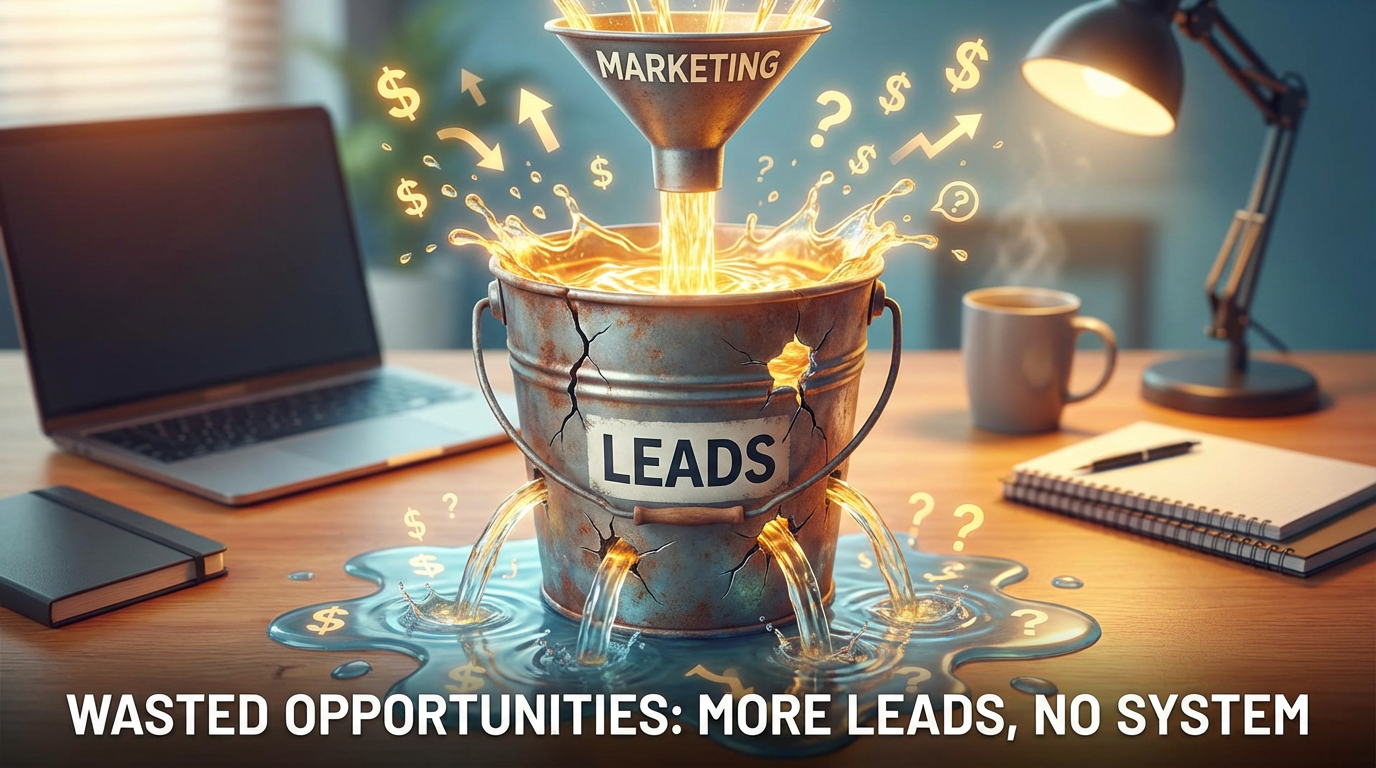
But somewhere between "interested" and "customer," they vanish.
It's not your offer. It's not your pricing. And it's probably not even your sales skills.
It's momentum. And momentum breaks in three very specific places that most founders never architect around.
Why Lead Engagement Isn't a Motivation Problem
Most founders assume leads go cold because they weren't serious. Or the timing wasn't right. Or they went with a competitor.
Sometimes that's true. But more often, the lead lost interest because you didn't give them a reason to stay interested.
Here's what actually happens: someone fills out a form, books a call, or downloads something. In that moment, they have interest—but they don't have context. They don't fully understand what you do, why it matters to them specifically, or what happens next.
Without context, interest evaporates. Fast.
And if your only follow-up strategy is "send a calendar invite and hope they show up," you're leaving money on the table at scale.
The First Break: Initial Contact (0–72 Hours)
The clock starts the second someone becomes a lead.
They fill out a form. They click a link. They respond to an ad. In that moment, they're warm. They're paying attention. They remember why they reached out.
But within 72 hours, that memory starts to fade. Other priorities resurface. The pain point that made them act becomes background noise again.
This is where most businesses lose the lead before they even realize they had one.
What Goes Wrong
You wait too long to respond. You send a generic "thanks for your interest" email. You assume the lead will stay engaged on their own.
None of that works.
The leads who convert fastest are the ones who get engaged immediately—not with a hard pitch, but with relevant context that deepens their understanding of the problem you solve.
What Should Happen Instead
Within the first 72 hours, a lead should receive:
- Immediate acknowledgment that you received their inquiry
- Clear next steps (even if that's just "expect a call within 24 hours")
- One piece of content that speaks directly to the problem they're experiencing
- A reason to stay mentally engaged with your brand until the next touchpoint
This doesn't require a complex funnel. It requires a simple, automated sequence that keeps you top of mind while the lead is still warm.
Most founders skip this entirely. They jump straight to "book a call" without building any bridge between interest and commitment.
That's why leads ghost.
The Second Break: Pre-Appointment Window
Let's say the lead books a call. Great. You're on the calendar for Thursday at 2 PM.
Now what?
If your answer is "nothing—I'll talk to them Thursday," you've already lost half the battle.
The period between booking and appointment is where context dies. The lead booked the call in a moment of clarity, but by the time Thursday rolls around, they've forgotten why they cared. They're confused about what the call is even for. And they're far more likely to no-show or come in cold.
The TV Show Recap Analogy
Think about how TV shows handle this. If you've ever jumped into a series mid-season—or missed a few episodes—the show doesn't assume you remember everything. They give you a recap.
"Previously on…"
It's not because you're stupid. It's because context fades. Even if you were paying attention last week, life happened. The show reorients you so you can engage with the current episode.
Your leads need the same thing.
Between the time they book and the time they show up, they need to be re-engaged with why this conversation matters. Not through aggressive sales emails—through strategic context delivery.
What Should Happen Instead
Every lead who books a call should enter a short, automated nurture sequence that:
- Reminds them why they booked
- Prepares them for what the conversation will cover
- Gives them one insight, story, or framework that primes them to engage meaningfully
- Reduces no-shows by keeping the appointment top of mind
This isn't about sending five emails. It's about sending the right touchpoints that rebuild context so the lead shows up ready to have a real conversation.
Most businesses send one calendar reminder. That's not nurture. That's logistics.
The Third Break: Post-Call Follow-Up
This is the most expensive place to lose a lead—and it's where most founders completely drop the ball.
You've spent money acquiring the lead. You've spent time nurturing them. You've gotten them on a call. Maybe they weren't ready to buy immediately. Maybe they needed to think about it. Maybe they had budget questions.
And then… nothing.
No follow-up sequence. No continued engagement. No long-term nurture.
You've just let a qualified, semi-warm lead go cold because you didn't build a system to stay in front of them.
Why This Is So Costly
Every lead you generate costs something. Whether it's ad spend, time, partnerships, or content creation—acquisition isn't free.
When you don't follow up post-call, you're writing off that entire investment. You're saying, "If they don't buy right now, they're dead to me."
But most leads don't convert immediately. They convert over time, with the right continued engagement.
And even if they never convert, they might refer someone. They might come back in six months. They might become a case study or testimonial down the line.
But only if you stay connected.
What Should Happen Instead
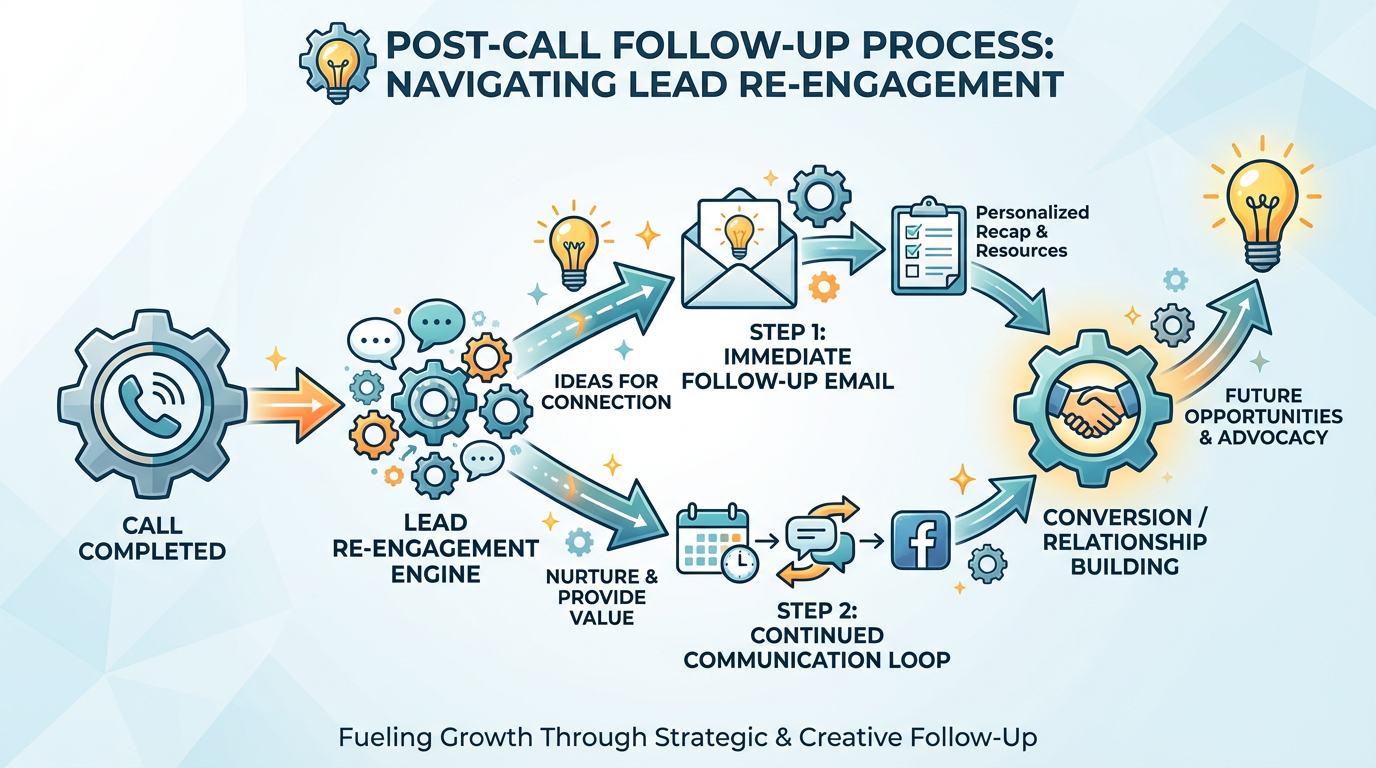
Post-call follow-up should be automatic, intentional, and designed to:
- Re-engage leads who weren't ready to buy immediately
- Keep your brand top of mind for future need
- Position you as the obvious choice when they are ready
- Create referral and word-of-mouth opportunities from people who didn't convert
This doesn't mean spamming people. It means having a long-term nurture system that continues to deliver value, build trust, and maintain context—even when someone isn't ready to buy today.
Most businesses have no system here at all. They follow up once, maybe twice, and then the lead goes into a black hole.
That's not a sales problem. That's a systems problem.
Why Founders Skip These Steps
It's not because you don't know follow-up matters. You do.
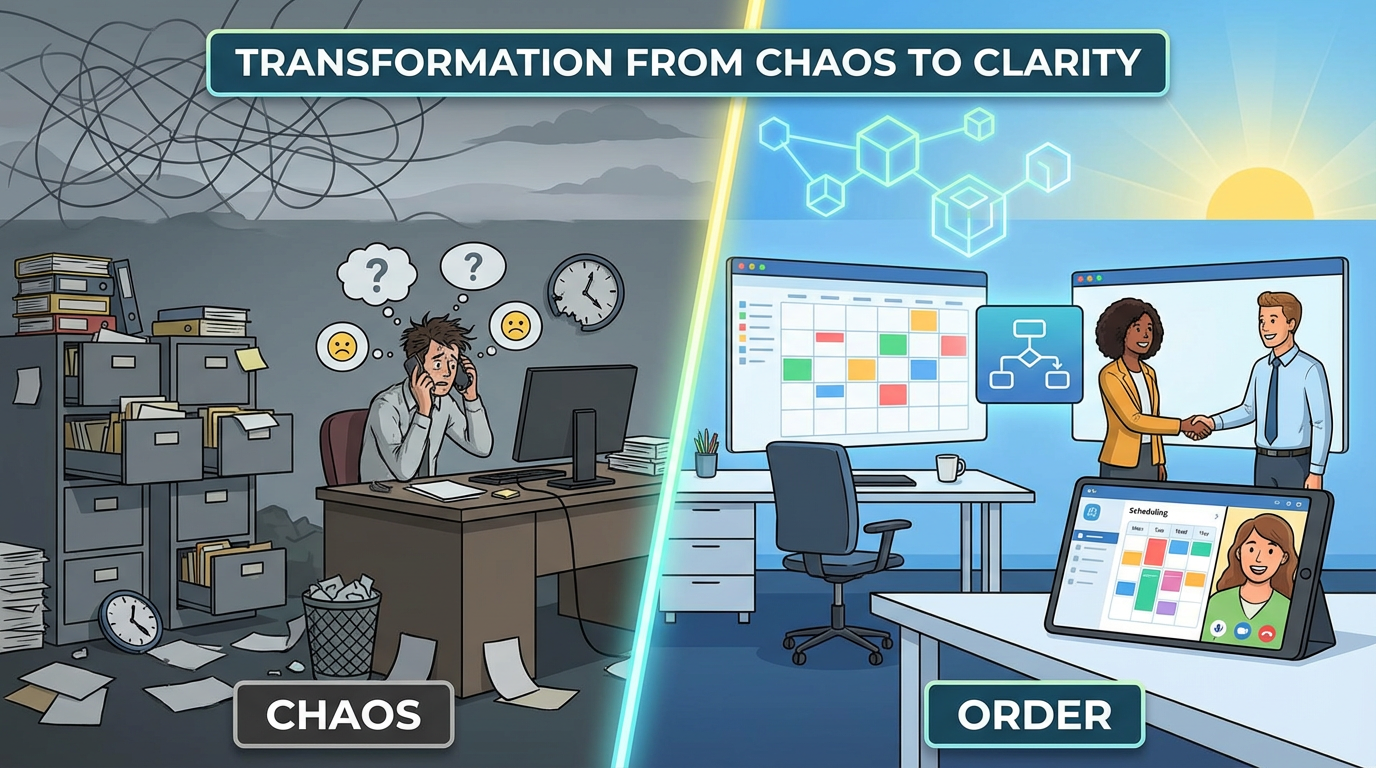
It's because building these systems feels overwhelming. You're already stretched thin. You don't have time to write emails, build sequences, and map out nurture flows.
So you default to "I'll just reach out manually when I remember."
But manual doesn't scale. And it doesn't protect momentum.
The leads who could have converted are slipping through the cracks—not because they weren't interested, but because you didn't create the structure to keep them engaged.
What to Do Instead
You don't need a complicated marketing stack. You don't need a full-time team.
You need three things:
A 72-hour engagement sequence that activates the moment someone becomes a lead. One or two touchpoints that provide immediate value and set expectations for what happens next.
A pre-appointment nurture flow that rebuilds context between booking and showing up. Short, focused, designed to remind the lead why this conversation matters.
A post-call follow-up system that continues to engage leads who didn't convert immediately. Not aggressive. Not salesy. Just consistent, valuable touchpoints that keep you top of mind.
Each of these can be built once and automated forever. You're not adding more to your plate—you're building infrastructure that works while you sleep.
The Real Cost of Not Fixing This
Here's what most founders miss: the leads you're losing aren't just lost revenue. They're lost leverage.
Every lead that goes cold is a lead you'll have to replace. That means more ad spend. More content. More outreach. More effort just to stay in the same place.
But when you fix the three break points, you don't just convert more leads. You reduce your acquisition costs. You shorten your sales cycle. You build a pipeline that compounds instead of leaking.
You stop working twice as hard to generate the same results.
Final Thought
Lead generation isn't your problem. Lead momentum is.
You're doing the hard part—getting people to raise their hands. But without systems to maintain engagement at the three critical moments, you're watching qualified leads evaporate.
The fix isn't working harder. It's designing better.
Build the systems that keep leads warm from first contact through conversion. Automate the nurture. Protect the momentum.
Because every lead you lose to a broken process is revenue you've already paid for—and will never see.
<a href="https://allianceforbusiness.co/book">Book a Clarity Call to audit where your leads are breaking down—and build the systems to fix it.
FAQ
How quickly do I really need to follow up with a new lead?
Within 72 hours, ideally sooner. The faster you engage, the warmer the lead stays. Waiting a week means you're starting from scratch—if they remember you at all.
What should I send between booking and the actual appointment?
One or two touchpoints that remind them why they booked and what to expect. Think context, not selling. A short email with a relevant insight or a quick video that reorients them to the conversation is enough.
What if someone doesn't buy on the call—should I keep following up?
Yes. Most leads don't convert immediately. A long-term nurture sequence keeps you top of mind for when they are ready, and increases the chance of referrals even if they never buy.
Isn't this just email marketing?
No. Email marketing is broadcasting to a list. This is strategic, behavior-triggered engagement designed to maintain momentum at specific moments in the lead journey. It's operational, not promotional.
Do I need expensive software to do this?
No. You need a CRM or email platform that supports basic automation. The tools matter less than the structure. Most founders already have the tech—they just haven't built the sequences.
How do I know if my follow-up is working?
Track show rates, response rates, and conversion rates at each stage. If leads are booking but not showing, your pre-appointment nurture is broken. If they're showing but not converting or staying engaged, your post-call system needs work.
Can I do this manually instead of automating?
Technically, yes. Realistically, no. Manual follow-up doesn't scale, and it's the first thing that falls apart when you get busy. Automation protects the process regardless of your bandwidth.
What's the biggest mistake founders make with lead follow-up?
Assuming interest equals commitment. Just because someone filled out a form or booked a call doesn't mean they'll stay engaged without intentional nurture. You have to actively maintain the context that brought them in.