Author: admin

  • Why You Don’t Need More Leads: Optimize Your Conversion System

    Why You Don’t Need More Leads: Optimize Your Conversion System

    Quick Answer / Key Takeaway

    • More leads won't fix conversion problems — they'll only expose them faster
    • Most consultants lose revenue because their client journey has gaps, not because they lack prospects
    • Optimizing your existing lead process delivers faster ROI than any marketing campaign
    • Referrals dry up when there's no intentional post-sale experience
    • Build systems that convert before you scale systems that attract

    You're getting leads. Maybe not a flood, but enough that you should be growing faster than you are.

    Yet somehow, revenue feels unpredictable. Referrals aren't happening. And you're convinced the answer is more traffic, more outreach, more visibility.

    Here's the truth most consultants don't want to hear: you don't have a lead problem. You have a conversion problem.

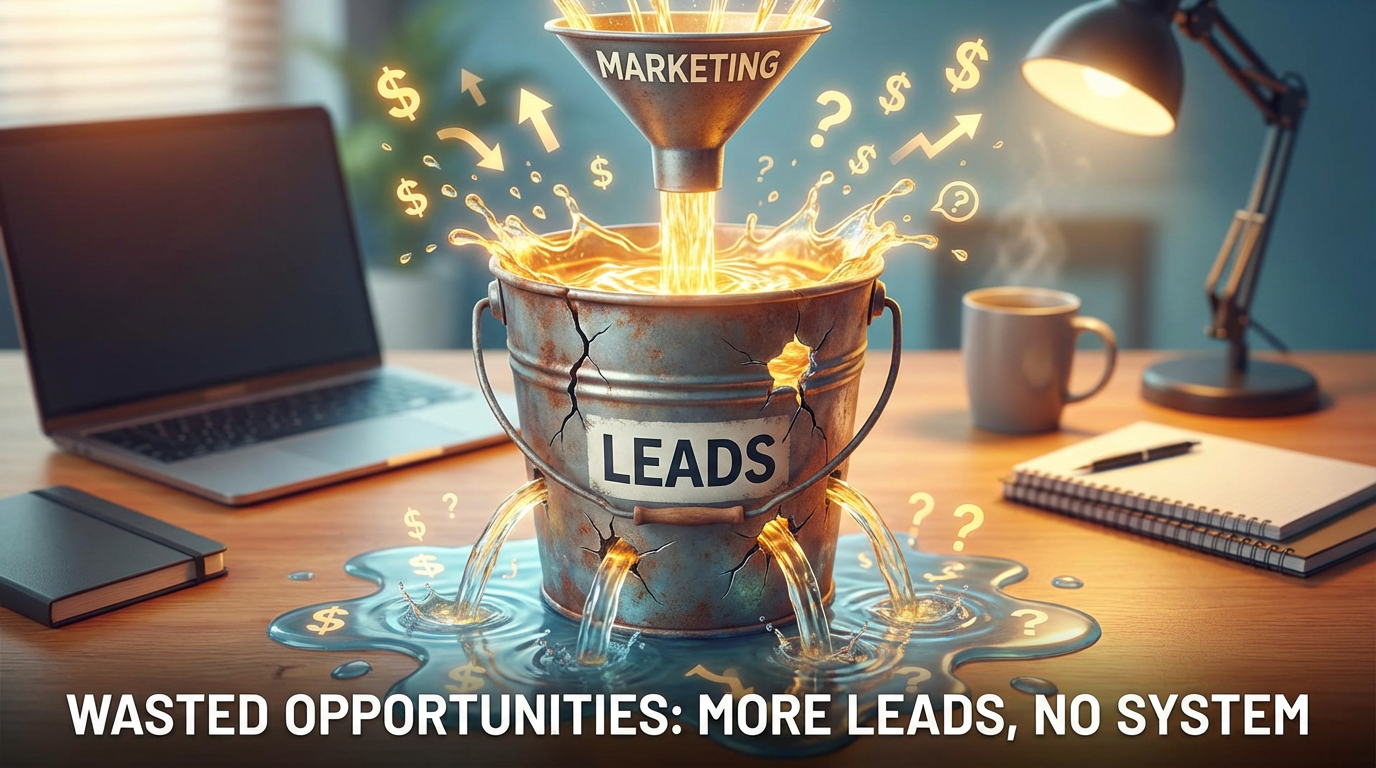
    And throwing more leads at a broken process is like pouring water into a leaky bucket. It looks productive. It feels like momentum. But nothing actually fills up.

    This article will show you why optimizing the leads you already have — and the clients you've already served — is the fastest path to predictable growth. We'll walk through what's actually breaking down in your process, how to fix it, and why most consultants are building in the wrong order.
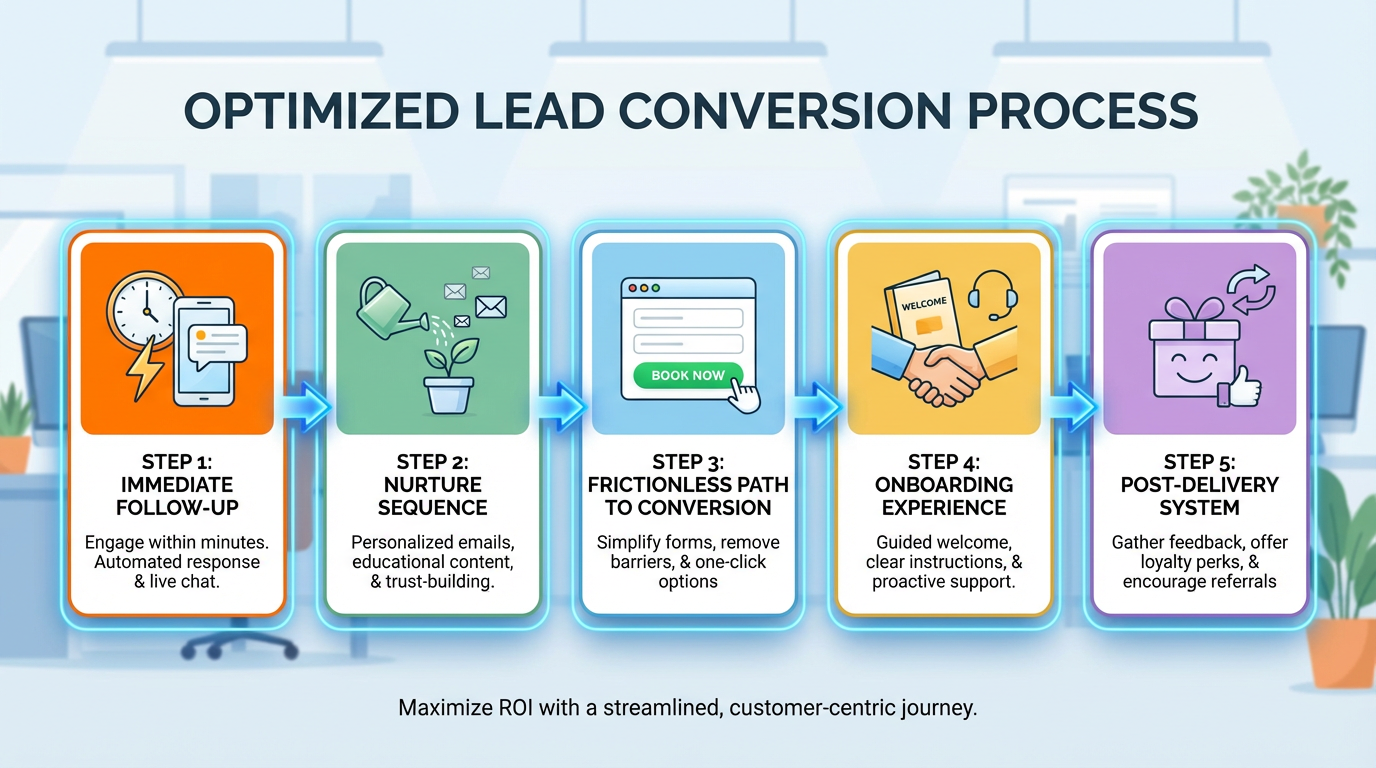
    Optimizing lead conversion process with 5 steps: immediate follow-up, nurture sequence, frictionless conversion, onboarding, and post-delivery.

    Clarify the System: Why "Getting More Leads" Is a Red Herring

    Most consultants operate under a dangerous assumption: that growth comes from volume.

    More discovery calls. More followers. More webinar attendees.

    But volume without structure doesn't create growth. It creates noise.

    Here's what actually happens when you add leads to an unoptimized system:

    • Leads slip through the cracks because there's no follow-up sequence
    • Prospects ghost because your process feels unclear or slow
    • You close clients, but they don't refer anyone because there's no intentional journey after the sale
    • You're busy, but revenue stays flat

    We see this constantly. A consultant comes to us excited about a new lead source — a podcast appearance, a speaking gig, a partnership. They're about to "scale." But when we audit their system, we find the same gaps every time:

    • No automated follow-up after initial contact
    • No clarity on what happens between "interested" and "sold"
    • No onboarding sequence that makes clients feel confident
    • No post-delivery touchpoint that asks for referrals or testimonials

    The result? They're working harder to attract people into a system that wasn't designed to keep them.

    This is not a marketing problem. It's a systems problem.

    And the fix isn't louder content or better ads. The fix is building a process that actually moves people from curious to committed — and then from customer to advocate.


    The False Logic of "I Just Need More at the Top"

    There's a seductive logic to chasing more leads. It feels proactive. It's measurable. It gives you something to do when revenue stalls.

    But here's what we've learned after working with dozens of consultants:

    If 10 leads aren't converting well, 100 won't either. You'll just burn out faster.

    Think about it. If your current process converts 20% of qualified leads, adding more leads gives you more nos. You'll work harder for the same inconsistent results.

    But if you optimize that process and start converting 40%, you've just doubled revenue without spending a dollar on ads.

    That's why the highest-leverage move for most consultants isn't traffic. It's conversion design.


    What Most Consultants Get Wrong About Lead Nurture

    Let's be clear: nurture doesn't mean "send a newsletter every week and hope people remember you."

    Real nurture is structured movement through a designed journey.

    It answers these questions in order:

    1. Why should I pay attention to you?
    2. What problem do you actually solve?
    3. How do I know you can solve it for someone like me?
    4. What happens if I say yes?
    5. What happens after I say yes?

    Most consultants answer question one (through content) and maybe question two (through a sales conversation). Then they wonder why people don't convert or refer.

    The problem isn't that your leads are "not ready." The problem is that your system never made them ready.

    Optimizing lead conversion process with 5 steps: immediate follow-up, nurture sequence, frictionless conversion, onboarding, and post-delivery.

    Craft the Workflow: What a Real Lead-to-Client System Looks Like

    Here's what an optimized conversion process actually includes — and it's simpler than you think.

    Step 1: Immediate Follow-Up That Builds Confidence

    When someone expresses interest — whether they download something, book a call, or reply to an email — what happens next?

    If the answer is "I manually reach out when I have time," you're already losing people.

    A real system sends an immediate confirmation that:

    • Acknowledges their action
    • Sets a clear expectation for what's next
    • Reinforces why they made the right move

    This isn't about being robotic. It's about being reliable.

    Step 2: A Nurture Sequence That Educates and Qualifies

    Between first contact and sale, there should be a series of touchpoints that help people self-identify whether they're ready.

    This might include:

    • A short video explaining how you work
    • A case story showing results for someone like them
    • A simple diagnostic or framework they can apply immediately

    The goal isn't to "stay top of mind." The goal is to move them closer to a decision by removing uncertainty.

    Step 3: A Frictionless Path to Conversion

    When someone is ready to move forward, how easy is it?

    Can they book time with you instantly? Or do they have to wait three days for you to reply?

    Is your pricing clear? Or do they have to get on a call to find out if they can even afford you?

    We've seen consultants lose deals simply because their process required too many steps. People don't ghost because they're not interested. They ghost because continuing forward felt harder than walking away.

    Step 4: An Onboarding Experience That Reinforces the Decision

    The highest-risk moment in any client relationship is right after they say yes.

    That's when buyer's remorse creeps in. That's when they start wondering if they made the right call.

    A strong onboarding system eliminates that doubt. It:

    • Confirms what they can expect and when
    • Introduces them to how you work
    • Removes ambiguity about next steps

    This isn't extra. This is foundational.

    Step 5: A Post-Delivery System That Generates Referrals

    Here's the part almost no one builds: the system that turns satisfied clients into active advocates.

    Most consultants finish a project, send an invoice, and hope the client remembers them later.

    That's not a referral strategy. That's luck.

    A referral system includes:

    • A structured off-boarding conversation
    • A request for a testimonial or case story
    • A simple way for them to introduce you to others
    • Periodic check-ins that keep the relationship alive

    Referrals don't happen by accident. They happen when you design for them.


    Create the Automation: Where Technology Actually Helps

    Let's talk about automation — but not in the way most people think.

    Automation isn't about removing the human touch. It's about removing the chaos.

    Here's where automation makes the biggest impact in a lead conversion system:

    Automatic Follow-Up Sequences

    Every time someone enters your world, they should receive a predictable series of messages that move them forward. No manual effort. No hoping you remember to reach out.

    Calendar and Booking Systems

    If someone has to email you back and forth to find a meeting time, you're creating unnecessary friction. A scheduling link removes that entirely.

    CRM That Tracks Where People Are

    You should be able to glance at a dashboard and know:

    • Who's engaged but hasn't booked yet
    • Who's gone quiet and needs a nudge
    • Who's a past client that hasn't been touched in 90 days

    This isn't about being pushy. It's about being intentional.

    Email and SMS Reminders

    People are busy. They forget. A simple reminder before a call or after a proposal can be the difference between a closed deal and a ghosted lead.

    None of this requires complex software or a technical team. We've built entire conversion systems using one platform and a few hours of setup.

    The ROI is immediate.


    Continue the System: Why Consistency Beats Intensity Every Time

    Here's the mistake we see over and over: consultants build a system, see it work, then abandon it the moment things get busy.

    They stop following up. They skip onboarding steps. They forget to ask for referrals.

    And then they wonder why revenue dips again.

    Systems don't work when you use them occasionally. They work when they run whether you're paying attention or not.

    That's the entire point.

    A strong conversion system should function while you're on vacation. It should work when you're heads-down delivering for clients. It should operate in the background so you can focus on the work only you can do.

    This is what separates consultants who grow steadily from those who plateau: the discipline to let the system do its job.


    The Real Reason Referrals Aren't Happening

    Let's address the elephant in the room.

    You've probably worked with clients who were thrilled with your work. They told you they'd refer people. Maybe they even said, "I know so many people who need this."

    And then… nothing.

    Here's why: referrals don't happen because clients are happy. They happen because you made it easy and gave them a reason to act now.

    Most consultants don't have a referral problem. They have a referral system problem.

    If you're not:

    • Asking directly at a specific moment
    • Giving clients language to use when they introduce you
    • Following up periodically with past clients
    • Creating a reason for them to think of you again

    Then you're hoping for referrals, not generating them.

    We worked with a client who was getting new customers consistently but had zero referrals. When we looked closer, we realized there was no journey after the sale. Clients finished the engagement and never heard from the consultant again.

    We built a simple post-delivery sequence: a thank-you message, a request for feedback, a referral ask with a specific intro template, and a quarterly check-in.

    Within 60 days, referrals went from zero to 30% of new business.

    Same clients. Same quality of work. Different system.


    What to Do Instead of Chasing More Leads

    If you take nothing else from this article, take this:

    Stop building another house when the one you're in isn't finished.

    Before you invest in ads, partnerships, or content strategies, ask yourself:

    • What happens to the leads I'm already getting?
    • Are they moving through a clear, intentional process?
    • Do I know where they're dropping off?
    • Am I making it easy for clients to refer me?

    If the answer to any of those is unclear, that's where you start.

    Optimize what's already in motion. Tighten the gaps. Build the system that turns interest into revenue and clients into advocates.

    Then — and only then — add more volume.

    Because when the system works, more leads don't create more chaos. They create predictable growth.


    FAQ

    Q: How do I know if I have a lead problem or a conversion problem?

    Look at your numbers. If you're getting inquiries but not closing them, or if you're closing clients but not getting referrals, you have a conversion problem. If you're getting zero inquiries, then yes, you may need more visibility. But for most consultants, the bottleneck is in the middle, not the top.

    Q: What's the first thing I should fix in my conversion process?

    Start with follow-up. Most revenue is lost because there's no consistent system to stay in touch with people who've expressed interest. Build an automated sequence that nurtures leads from first contact to decision.

    Q: Do I really need automation, or can I just do this manually?

    You can do it manually — until you can't. The moment you get busy or bring on more clients, manual systems break. Automation isn't about removing the personal touch. It's about making sure nothing falls through the cracks.

    Q: How do I ask for referrals without feeling pushy?

    Make it part of your process, not a favor. At the end of an engagement, say something like: "I'm glad this was valuable. If you know someone facing a similar challenge, I'd love an introduction. Here's exactly how to describe what we do." Give them the language. Make it easy.

    Q: What if my leads just aren't the right fit?

    Then your qualification process needs work. A good conversion system includes filtering, so you're not wasting time on people who will never buy. Build questions or content that help people self-select before they ever get on a call with you.

    Q: How long does it take to build a lead conversion system?

    If you're starting from scratch, a solid system can be built in a few weeks. If you already have pieces in place, it's about connecting the gaps. The key is starting with the highest-impact fix first — usually follow-up or onboarding.

    Q: What's the ROI of fixing my conversion process vs. running ads?

    Let's say you're converting 20% of leads and you get 10 leads a month. That's 2 clients. If you optimize to 40%, that's 4 clients — you just doubled revenue with zero ad spend. Compare that to spending thousands on ads to get 10 more leads that still only convert at 20%. The math is clear.

    Q: Can this work if I'm a solo consultant?

    Yes. In fact, solo consultants benefit the most because you don't have a team to pick up the slack. A strong system removes you from the repetitive work so you can focus on delivery and sales.


    If you're tired of working harder for unpredictable results — and you're ready to build a system that actually converts the leads you're already getting — let's talk.

    We'll audit where your process is breaking down and show you exactly what to fix first.

    <a href="https://allianceforbusiness.co/book">Book a Clarity Call
  • Why Lead Generation Without Systems Is Setting Your Business Up to Fail

    Why Lead Generation Without Systems Is Setting Your Business Up to Fail

    Quick Answer / Key Takeaway

    • Generating leads doesn't matter if you can't convert them into paying clients
    • The gap between interest and purchase is where most revenue disappears
    • Backend systems determine whether demand becomes income or just added stress
    • Without integrated tools for follow-up and customer communication, you're leaving money on the table
    • Success isn't about getting more leads—it's about having infrastructure that turns leads into clients consistently

    Most coaches and consultants can generate interest in their services. That's rarely the problem.

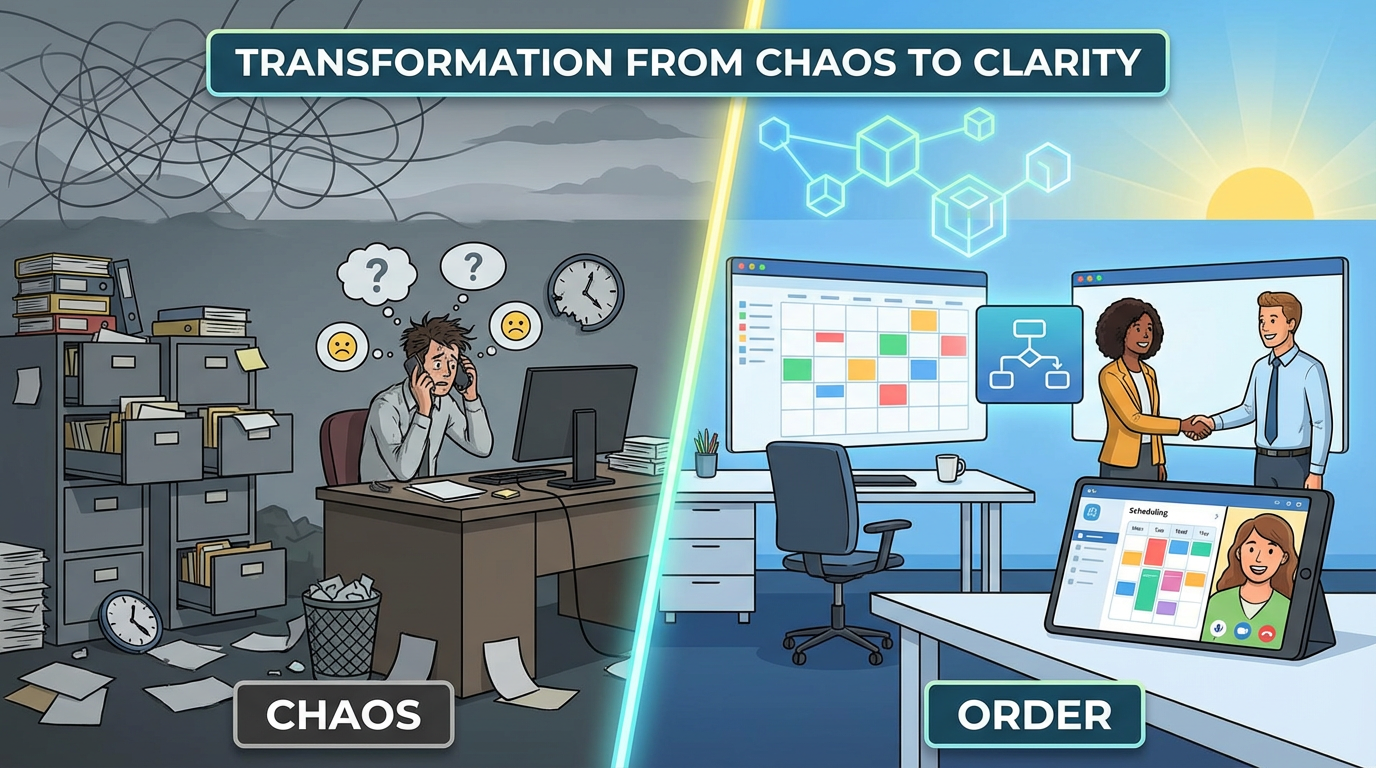
    The problem shows up after someone says "I'm interested"—and you have no clear way to move them from curiosity to payment. No calendar link. No follow-up sequence. No organized way to track who paid, who needs a reminder, or who fell through the cracks entirely.

    You're not failing because you can't attract people. You're failing because you have no system to catch them once they arrive.

    This article breaks down why lead generation without backend infrastructure creates chaos instead of revenue—and what actually needs to exist between "interested" and "paid client."

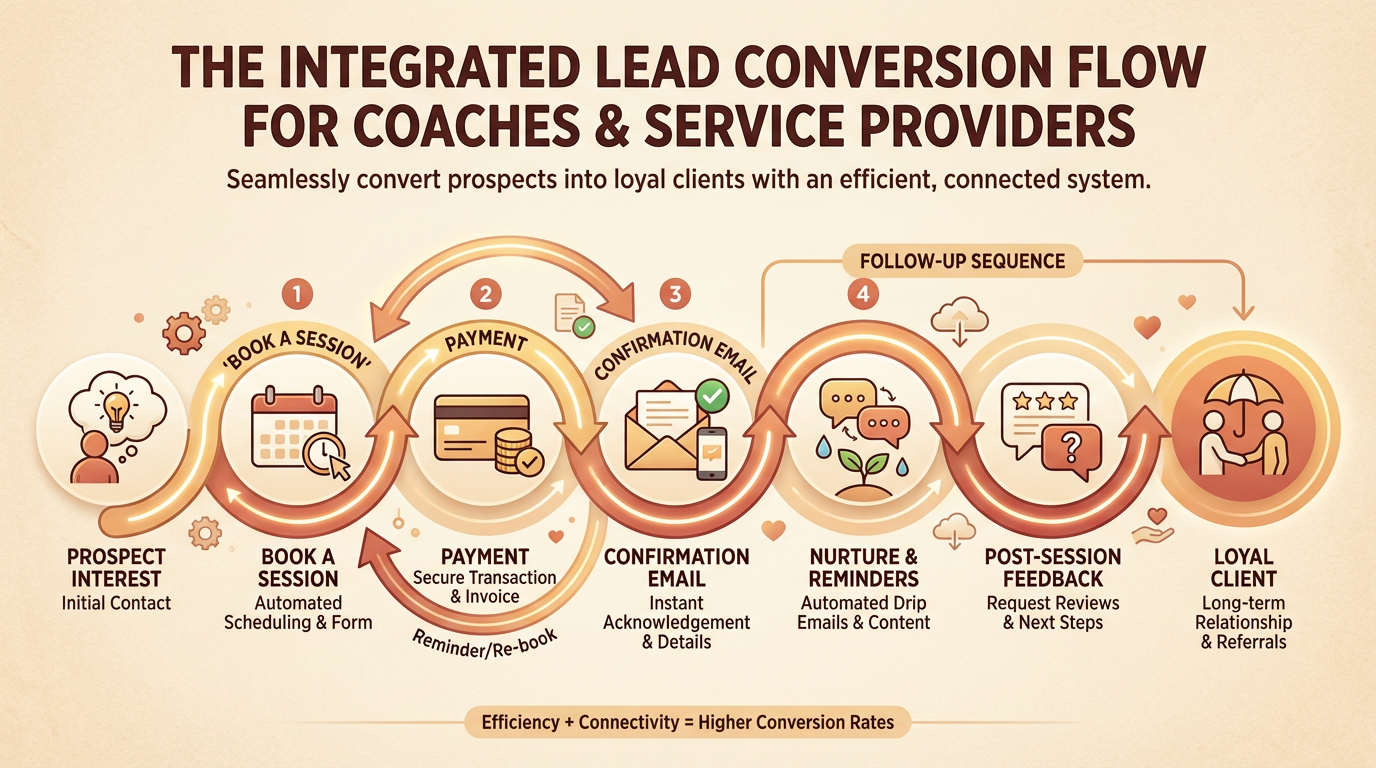
    Lead conversion process for coaches highlighting booking systems, payment, confirmation, nurturing, feedback, client loyalty.

    The Problem Isn't Your Lead Generation

    Here's what usually happens:

    A coach invests in marketing. They post consistently. They run ads. They speak on stages or show up in communities. People respond. Interest builds. Inquiries come in.

    Then everything falls apart.

    Why? Because the business has no process for what happens next.

    Someone wants to book a session, but there's no calendar link. They send a DM or email asking how to pay, and it takes two days to respond because the founder is buried in client work. When payment finally happens through PayPal or Venmo, there's no confirmation email. No onboarding sequence. No clarity about what happens next.

    The client paid, but they don't feel taken care of. And the founder has no idea if that person actually booked a time, received the intake form, or is sitting there wondering if they got scammed.

    This is what drowning in your own success looks like.

    You did the hard part—you got people interested. But without systems to manage that interest, you're overwhelmed, your customers are confused, and a significant amount of revenue just disappears into the chaos.

    What Founders Confuse: Demand vs. Capacity

    Most founders think the goal is more leads.

    But demand without infrastructure isn't growth. It's a crisis waiting to happen.

    Here's the reality: if you can't handle the clients you already have, more marketing will only make things worse. You'll attract more people you can't serve. You'll create more confusion. You'll burn out faster.

    The issue isn't that you need better lead generation. The issue is that your business has no operational backbone to convert those leads efficiently.

    Think about it this way:

    If 100 people express interest in your offer and only 10 become paying clients, you don't have a lead problem. You have a conversion problem. And conversion problems are almost always systems problems.

    You're losing people between interest and purchase because:

    • There's no easy way to book with you
    • Payment is clunky or unclear
    • Follow-up is manual and inconsistent
    • You have no way to track who's where in the process
    • Communication feels scattered across DMs, emails, and texts

    Every extra step a potential client has to take is a place they can drop off. Every point of confusion is a reason to choose someone else. Every delayed response is lost momentum.

    Lead generation gets attention. Systems close the sale.

    Lead conversion process for coaches highlighting booking systems, payment, confirmation, nurturing, feedback, client loyalty.

    The PayPal Trap: Why Single-Tool Businesses Break Down

    Let's talk about one of the most common mistakes: using PayPal (or Venmo, or Zelle) as your entire business infrastructure.

    Here's what that looks like in practice:

    A potential client asks how to pay. You send them your PayPal link. They pay. You get a notification. Maybe you send a thank-you text. Maybe you don't. You ask them to book a time. They say they will. A week goes by. You're not sure if they booked. You check your calendar. Nothing. You reach back out. They don't respond.

    Now multiply that scenario by 20, 50, 100 inquiries per month.

    The problem with PayPal-only businesses is that payment and communication are completely disconnected. You have no centralized way to know:

    • Who paid
    • When they paid
    • Whether they received confirmation
    • If they booked their session
    • What their contact information is
    • How to follow up systematically

    Every transaction is a one-off event with no connection to the next step. You're stitching together a business with duct tape, and it shows.

    Your clients feel it. They paid, but they don't feel onboarded. They're waiting for instructions that may or may not come. They're unclear about next steps. And because you have no follow-up system, you're relying entirely on memory and manual effort to keep things moving.

    That's not scalable. It's not even sustainable at low volume.

    The solution isn't to work harder. It's to stop treating your business like a side hustle and start building actual infrastructure.

    What Integrated Systems Actually Look Like

    An integrated system doesn't mean complicated. It means connected.

    Here's what should happen when someone wants to work with you:

    1. They click a link to book a session
    2. They're taken to a calendar that shows your real availability
    3. They select a time
    4. They're prompted to pay
    5. Payment triggers an automatic confirmation email with session details
    6. Their contact information is added to your CRM
    7. They receive a reminder email 24 hours before the session
    8. After the session, they're added to a follow-up sequence for future offers

    That's it. That's the baseline.

    None of this requires a massive team or a six-figure tech stack. It requires choosing tools that talk to each other and setting them up correctly.

    When your calendar, payment processor, email platform, and CRM are integrated, your clients have a seamless experience—and you're not manually managing every step.

    You're not copying and pasting email addresses into spreadsheets. You're not wondering if someone paid. You're not chasing people down to book their session.

    The system does that work for you.

    And here's the bigger point: when your backend is clean, you can actually focus on delivery. You can show up fully for the clients you have instead of drowning in admin work for the clients you're trying to close.

    Why "Too Many Leads" Can Be a Business-Killing Problem

    This sounds counterintuitive, but it's true: high demand without operational capacity will destroy your business faster than no demand at all.

    Here's why:

    When you have more interest than you can handle and no systems to manage it, every new lead becomes a liability. You can't respond fast enough. You can't onboard people properly. You can't deliver quality service because you're buried in logistics.

    Your clients have a bad experience. They don't refer others. They don't come back. And your reputation takes a hit—not because your core offer is bad, but because your operations are a mess.

    This is the exact situation the coach in our transcript faced. Great lead generation. High demand. No backend infrastructure. The result? Confusion, overwhelm, and tens of thousands of dollars in lost revenue every month.

    They weren't failing at marketing. They were failing at operations.

    And that's the part most founders don't see coming. They think success is about getting noticed. But real success is about having the infrastructure to convert attention into income—and to do it repeatedly without losing your mind.

    If you're drowning in interest but not growing revenue, the answer isn't better marketing. It's better systems.

    What You Actually Need to Convert Leads Consistently

    Let's make this practical.

    If you're a coach, consultant, or service provider, here's the minimum viable infrastructure you need:

    A scheduling tool that syncs with your calendar
    No more back-and-forth emails about availability. Your clients should be able to see your open slots and book directly.

    A payment processor that integrates with your scheduling tool
    When someone books, they should be able to pay immediately. And that payment should trigger the next step automatically.

    A CRM to track every client interaction
    You need one place where you can see: Who inquired. Who paid. Who booked. Who needs follow-up. Who's a repeat client.

    Automated email sequences for confirmation, reminders, and follow-up
    Your clients should never wonder what happens next. And you should never have to manually send the same email 50 times.

    A centralized communication system
    Whether it's email, SMS, or a client portal, you need one place where all communication lives—not scattered across Instagram DMs, text threads, and email inboxes.

    This isn't overkill. This is baseline business infrastructure.

    And the reason most founders don't have it isn't because they don't know it exists. It's because they're moving so fast that they never stop to build it. They're too busy putting out fires to install a sprinkler system.

    But here's the truth: you will never outgrow the need for systems. You'll only feel the pain of not having them more intensely as you scale.

    The Real Cost of "Winging It"

    Let's talk about what it actually costs to run a business without systems.

    It's not just lost revenue—though that's significant. The coach we worked with was losing $50,000 per month in opportunities they couldn't convert. That's $600,000 per year left on the table.

    But the hidden costs are just as damaging:

    Reputation damage. When clients have a confusing or frustrating experience, they don't just leave quietly. They tell other people. They don't refer you. They don't come back for your next offer.

    Founder burnout. When you're the system, you can't take a day off. You can't delegate. You can't grow. Every new client adds to your workload instead of your income.

    Missed opportunities for scale. Without systems, you're stuck trading time for money. You can't build leveraged offers. You can't hire support. You can't create anything that runs without you.

    Decision fatigue. When every client interaction requires you to figure out the next step manually, you're making hundreds of tiny decisions every week that should be automated. That's exhausting.

    The entrepreneurs who scale aren't necessarily smarter or more talented. They just build infrastructure that allows their effort to compound instead of reset with every new client.

    Systems aren't about removing the human touch. They're about removing the chaos so you can actually be present for the humans you're serving.

    How to Stop Leaving Money on the Table

    If you're reading this and recognizing your business, here's what to do:

    Audit your current process from inquiry to payment. Map out every step a potential client has to take to work with you. Identify where people are dropping off. Find the friction points.

    Choose tools that integrate with each other. Don't just add more apps. Build a connected ecosystem where information flows automatically from one tool to the next.

    Automate confirmation and follow-up. If you're manually sending the same message more than twice, it should be automated.

    Centralize client communication. Stop managing inquiries across five different platforms. Pick one system and funnel everything through it.

    Test your own process as if you were a client. Book a session with yourself. Go through your payment process. See what the experience actually feels like. If it's confusing for you, it's definitely confusing for your clients.

    This doesn't have to happen overnight. But it does have to happen intentionally.

    Start with the biggest bottleneck. Fix that. Then move to the next one. You don't need perfect systems. You need functional ones that remove you from the repetitive, manual work so you can focus on growth and delivery.

    Why This Matters More Than Your Next Marketing Campaign

    Here's the part most coaches don't want to hear:

    Your next launch won't fix this. Your next ad campaign won't fix this. Your next viral post won't fix this.

    If your backend is broken, more visibility will only amplify the problem.

    You'll attract more people you can't serve. You'll create more confusion. You'll burn out faster. And you'll wonder why success feels so hard when you're doing everything the gurus told you to do.

    The answer is simple: marketing gets attention. Systems create clients.

    You can have the best offer in the world, but if people can't easily buy it, book it, and experience it without friction, you're losing.

    And the tragedy is that most of that loss is invisible. You don't see the people who bounced because your booking process was too confusing. You don't see the revenue that never materialized because follow-up was inconsistent. You don't see the referrals that didn't happen because the client experience felt chaotic.

    You just see that you're working harder than ever and not seeing the results you expected.

    That's the cost of ignoring operations.

    The good news? This is fixable. You don't need a bigger team. You don't need a bigger budget. You need clarity about what's broken and a plan to fix it systematically.

    And that's exactly what we help founders do.

    [Book a Clarity Call[(https://allianceforbusiness.co/book) and we'll audit your current systems, identify where revenue is leaking, and show you exactly what needs to exist for your business to convert leads consistently—without adding more to your plate.


    FAQ

    Q: I'm just starting out. Do I really need all these systems right away?

    You need the basics from day one: a way to schedule, a way to get paid, and a way to follow up. You don't need complex automation, but you do need a clear path from interest to payment. Waiting until you're overwhelmed to build systems means you're building under pressure—and that's when mistakes happen.

    Q: What if I can't afford expensive software?

    You don't need expensive software. You need integrated software. Many scheduling tools, CRMs, and email platforms have free or low-cost tiers that work perfectly for small businesses. The cost of not having systems is far higher than the cost of the tools themselves.

    Q: I like the personal touch of handling everything manually. Won't automation make my business feel impersonal?

    Automation doesn't replace the personal touch—it protects it. When you automate repetitive admin tasks, you have more time and energy to be present with clients during the interactions that actually matter. Your clients don't want you manually sending calendar invites. They want you focused and prepared when you show up for their session.

    Q: How do I know which tools to use?

    Start with what integrates. Don't pick tools in isolation. Choose a scheduling platform that connects to your payment processor and CRM. Most modern tools are built to work together—you just need to set them up correctly. If you're unsure, audit your process first and identify your biggest bottleneck. Fix that, then expand.

    Q: What if I'm already drowning and don't have time to set up systems?

    That's exactly why you need systems. The "I don't have time to fix this" loop is what keeps founders stuck. You'll never have more time until you create it by removing yourself from manual, repetitive work. Block a few hours, fix one bottleneck, and immediately you'll feel the difference. Or bring in someone who can build it for you while you keep serving clients.

    Q: I have a CRM but I'm still losing leads. What's wrong?

    Having a CRM doesn't help if it's not connected to your other tools or if you're not using it consistently. Most lead loss happens because there's no automated follow-up or because client information lives in multiple places. A CRM is only valuable if it's integrated into your workflow and actively managing your pipeline—not just storing names.

    Q: Can I really convert leads consistently without spending more on ads?

    Absolutely. Most founders don't have a traffic problem—they have a conversion problem. Fixing your backend systems can double your revenue without spending another dollar on marketing. When you stop losing leads to friction and confusion, the clients you're already attracting actually become paying customers.

    Q: How long does it take to set up proper systems?

    For most small businesses, you can have functional baseline systems in place within a week. It's not about perfection—it's about having the essentials connected and working. From there, you refine and optimize as you grow. The key is starting with clarity about what needs to happen and building intentionally, not reactively.

  • The Three Critical Moments You’re Losing Leads (And How to Fix Them)

    The Three Critical Moments You’re Losing Leads (And How to Fix Them)

    Quick Answer / Key Takeaway

    • Most leads go cold at three specific points: initial contact, the pre-appointment window, and post-call follow-up
    • You have 72 hours or less after first contact to engage before interest drops significantly
    • The gap between booking and appointment is where context dies—leads forget why they cared
    • Post-call follow-up isn't optional marketing—it's protecting your acquisition investment
    • Each breakdown point needs intentional systems, not just better effort

    You're generating leads. People are raising their hands. Some are even booking calls.

    But somewhere between "interested" and "customer," they vanish.

    It's not your offer. It's not your pricing. And it's probably not even your sales skills.

    It's momentum. And momentum breaks in three very specific places that most founders never architect around.

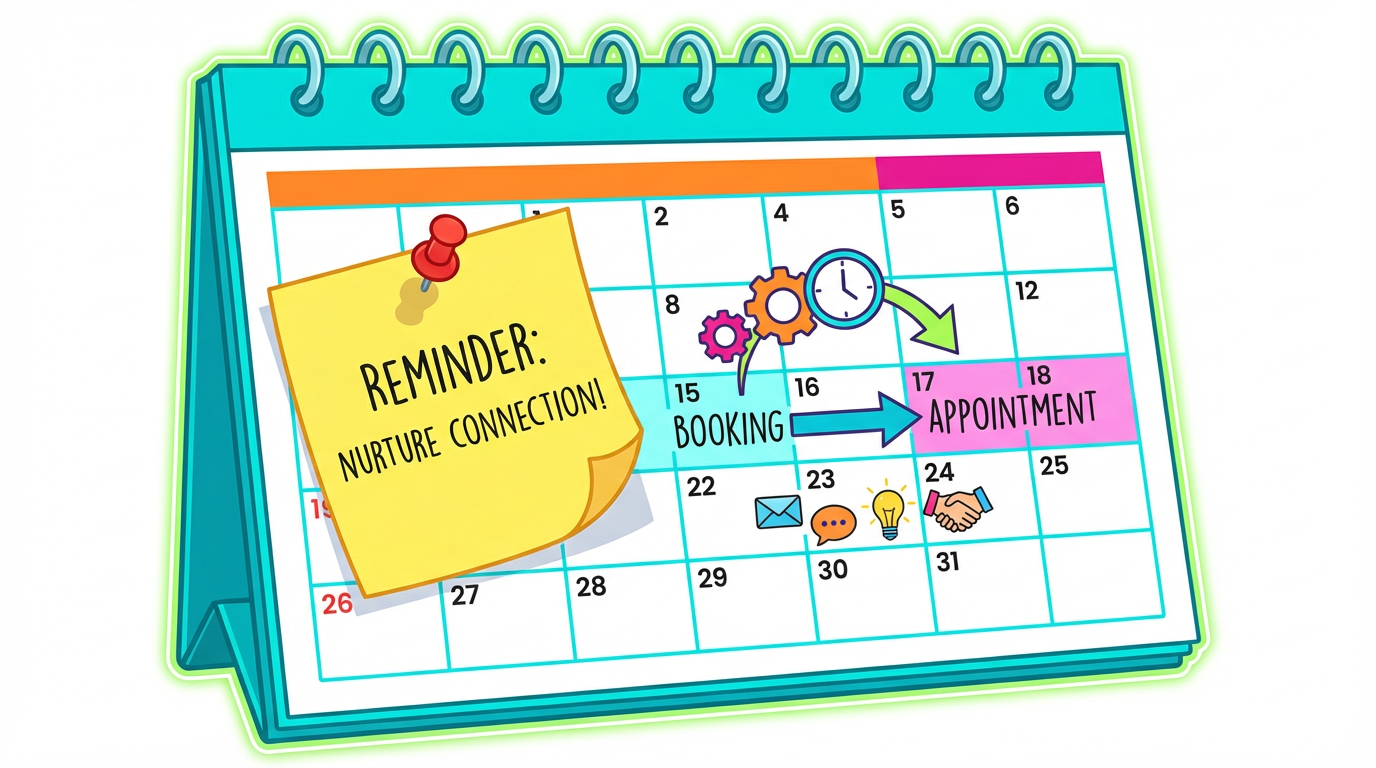
    Calendar with a sticky note: "Reminder: Nurture Connection!" showing booking, appointment, and icons for lead engagement strategies.

    Why Lead Engagement Isn't a Motivation Problem

    Most founders assume leads go cold because they weren't serious. Or the timing wasn't right. Or they went with a competitor.

    Sometimes that's true. But more often, the lead lost interest because you didn't give them a reason to stay interested.

    Here's what actually happens: someone fills out a form, books a call, or downloads something. In that moment, they have interest—but they don't have context. They don't fully understand what you do, why it matters to them specifically, or what happens next.

    Without context, interest evaporates. Fast.

    And if your only follow-up strategy is "send a calendar invite and hope they show up," you're leaving money on the table at scale.

    The First Break: Initial Contact (0–72 Hours)

    The clock starts the second someone becomes a lead.

    They fill out a form. They click a link. They respond to an ad. In that moment, they're warm. They're paying attention. They remember why they reached out.

    But within 72 hours, that memory starts to fade. Other priorities resurface. The pain point that made them act becomes background noise again.

    This is where most businesses lose the lead before they even realize they had one.

    What Goes Wrong

    You wait too long to respond. You send a generic "thanks for your interest" email. You assume the lead will stay engaged on their own.

    None of that works.

    The leads who convert fastest are the ones who get engaged immediately—not with a hard pitch, but with relevant context that deepens their understanding of the problem you solve.

    What Should Happen Instead

    Within the first 72 hours, a lead should receive:

    • Immediate acknowledgment that you received their inquiry
    • Clear next steps (even if that's just "expect a call within 24 hours")
    • One piece of content that speaks directly to the problem they're experiencing
    • A reason to stay mentally engaged with your brand until the next touchpoint

    This doesn't require a complex funnel. It requires a simple, automated sequence that keeps you top of mind while the lead is still warm.

    Most founders skip this entirely. They jump straight to "book a call" without building any bridge between interest and commitment.

    That's why leads ghost.

    The Second Break: Pre-Appointment Window

    Let's say the lead books a call. Great. You're on the calendar for Thursday at 2 PM.

    Now what?

    If your answer is "nothing—I'll talk to them Thursday," you've already lost half the battle.

    The period between booking and appointment is where context dies. The lead booked the call in a moment of clarity, but by the time Thursday rolls around, they've forgotten why they cared. They're confused about what the call is even for. And they're far more likely to no-show or come in cold.

    The TV Show Recap Analogy

    Think about how TV shows handle this. If you've ever jumped into a series mid-season—or missed a few episodes—the show doesn't assume you remember everything. They give you a recap.

    "Previously on…"

    It's not because you're stupid. It's because context fades. Even if you were paying attention last week, life happened. The show reorients you so you can engage with the current episode.

    Your leads need the same thing.

    Between the time they book and the time they show up, they need to be re-engaged with why this conversation matters. Not through aggressive sales emails—through strategic context delivery.

    What Should Happen Instead

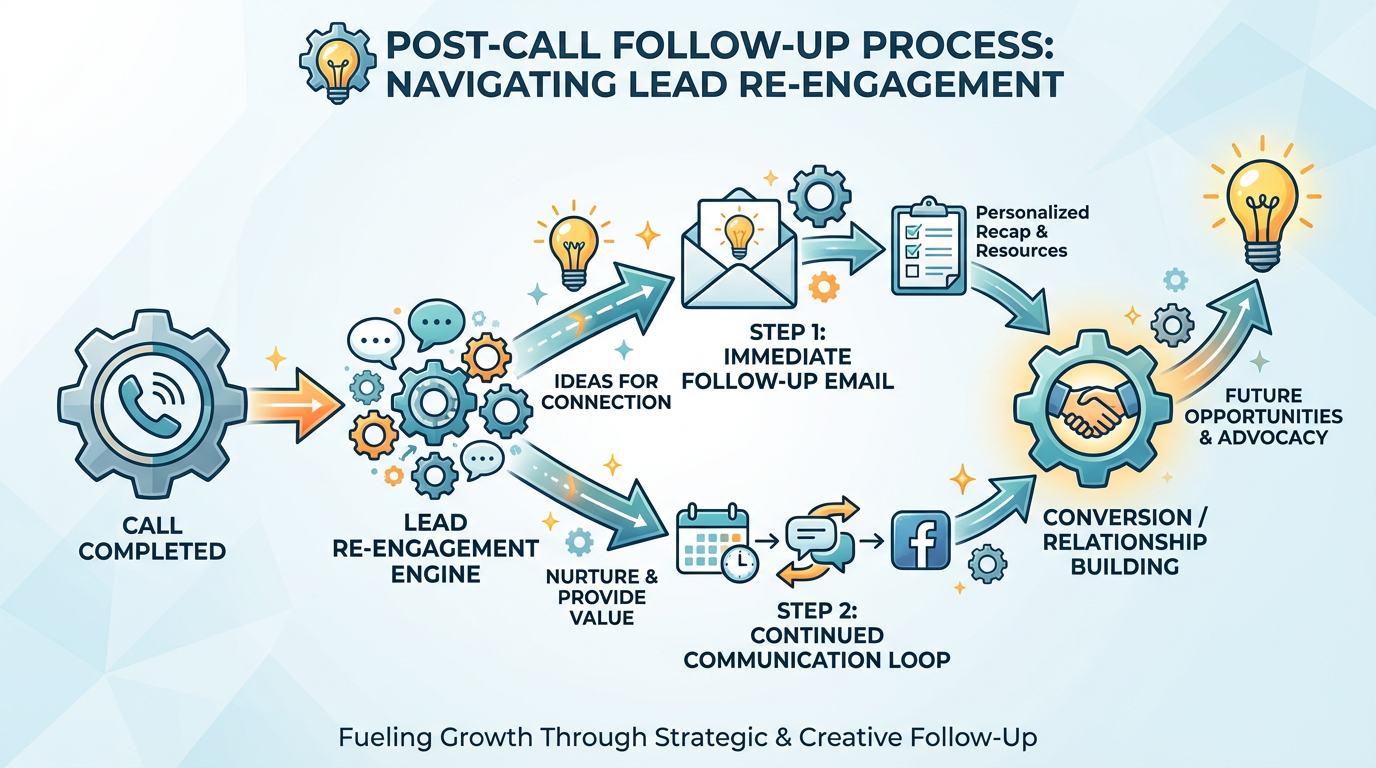
    Every lead who books a call should enter a short, automated nurture sequence that:

    • Reminds them why they booked
    • Prepares them for what the conversation will cover
    • Gives them one insight, story, or framework that primes them to engage meaningfully
    • Reduces no-shows by keeping the appointment top of mind

    This isn't about sending five emails. It's about sending the right touchpoints that rebuild context so the lead shows up ready to have a real conversation.

    Most businesses send one calendar reminder. That's not nurture. That's logistics.

    Calendar with a sticky note: "Reminder: Nurture Connection!" showing booking, appointment, and icons for lead engagement strategies.

    The Third Break: Post-Call Follow-Up

    This is the most expensive place to lose a lead—and it's where most founders completely drop the ball.

    You've spent money acquiring the lead. You've spent time nurturing them. You've gotten them on a call. Maybe they weren't ready to buy immediately. Maybe they needed to think about it. Maybe they had budget questions.

    And then… nothing.

    No follow-up sequence. No continued engagement. No long-term nurture.

    You've just let a qualified, semi-warm lead go cold because you didn't build a system to stay in front of them.

    Why This Is So Costly

    Every lead you generate costs something. Whether it's ad spend, time, partnerships, or content creation—acquisition isn't free.

    When you don't follow up post-call, you're writing off that entire investment. You're saying, "If they don't buy right now, they're dead to me."

    But most leads don't convert immediately. They convert over time, with the right continued engagement.

    And even if they never convert, they might refer someone. They might come back in six months. They might become a case study or testimonial down the line.

    But only if you stay connected.

    What Should Happen Instead

    Post-call follow-up should be automatic, intentional, and designed to:

    • Re-engage leads who weren't ready to buy immediately
    • Keep your brand top of mind for future need
    • Position you as the obvious choice when they are ready
    • Create referral and word-of-mouth opportunities from people who didn't convert

    This doesn't mean spamming people. It means having a long-term nurture system that continues to deliver value, build trust, and maintain context—even when someone isn't ready to buy today.

    Most businesses have no system here at all. They follow up once, maybe twice, and then the lead goes into a black hole.

    That's not a sales problem. That's a systems problem.

    Why Founders Skip These Steps

    It's not because you don't know follow-up matters. You do.

    It's because building these systems feels overwhelming. You're already stretched thin. You don't have time to write emails, build sequences, and map out nurture flows.

    So you default to "I'll just reach out manually when I remember."

    But manual doesn't scale. And it doesn't protect momentum.

    The leads who could have converted are slipping through the cracks—not because they weren't interested, but because you didn't create the structure to keep them engaged.

    What to Do Instead

    You don't need a complicated marketing stack. You don't need a full-time team.

    You need three things:

    A 72-hour engagement sequence that activates the moment someone becomes a lead. One or two touchpoints that provide immediate value and set expectations for what happens next.

    A pre-appointment nurture flow that rebuilds context between booking and showing up. Short, focused, designed to remind the lead why this conversation matters.

    A post-call follow-up system that continues to engage leads who didn't convert immediately. Not aggressive. Not salesy. Just consistent, valuable touchpoints that keep you top of mind.

    Each of these can be built once and automated forever. You're not adding more to your plate—you're building infrastructure that works while you sleep.

    The Real Cost of Not Fixing This

    Here's what most founders miss: the leads you're losing aren't just lost revenue. They're lost leverage.

    Every lead that goes cold is a lead you'll have to replace. That means more ad spend. More content. More outreach. More effort just to stay in the same place.

    But when you fix the three break points, you don't just convert more leads. You reduce your acquisition costs. You shorten your sales cycle. You build a pipeline that compounds instead of leaking.

    You stop working twice as hard to generate the same results.

    Final Thought

    Lead generation isn't your problem. Lead momentum is.

    You're doing the hard part—getting people to raise their hands. But without systems to maintain engagement at the three critical moments, you're watching qualified leads evaporate.

    The fix isn't working harder. It's designing better.

    Build the systems that keep leads warm from first contact through conversion. Automate the nurture. Protect the momentum.

    Because every lead you lose to a broken process is revenue you've already paid for—and will never see.

    <a href="https://allianceforbusiness.co/book">Book a Clarity Call to audit where your leads are breaking down—and build the systems to fix it.

    FAQ

    How quickly do I really need to follow up with a new lead?

    Within 72 hours, ideally sooner. The faster you engage, the warmer the lead stays. Waiting a week means you're starting from scratch—if they remember you at all.

    What should I send between booking and the actual appointment?

    One or two touchpoints that remind them why they booked and what to expect. Think context, not selling. A short email with a relevant insight or a quick video that reorients them to the conversation is enough.

    What if someone doesn't buy on the call—should I keep following up?

    Yes. Most leads don't convert immediately. A long-term nurture sequence keeps you top of mind for when they are ready, and increases the chance of referrals even if they never buy.

    Isn't this just email marketing?

    No. Email marketing is broadcasting to a list. This is strategic, behavior-triggered engagement designed to maintain momentum at specific moments in the lead journey. It's operational, not promotional.

    Do I need expensive software to do this?

    No. You need a CRM or email platform that supports basic automation. The tools matter less than the structure. Most founders already have the tech—they just haven't built the sequences.

    How do I know if my follow-up is working?

    Track show rates, response rates, and conversion rates at each stage. If leads are booking but not showing, your pre-appointment nurture is broken. If they're showing but not converting or staying engaged, your post-call system needs work.

    Can I do this manually instead of automating?

    Technically, yes. Realistically, no. Manual follow-up doesn't scale, and it's the first thing that falls apart when you get busy. Automation protects the process regardless of your bandwidth.

    What's the biggest mistake founders make with lead follow-up?

    Assuming interest equals commitment. Just because someone filled out a form or booked a call doesn't mean they'll stay engaged without intentional nurture. You have to actively maintain the context that brought them in.

  • The Three Critical Moments You’re Losing Leads (And How to Fix Them)

    The Three Critical Moments You’re Losing Leads (And How to Fix Them)

    Quick Answer / Key Takeaway

    • Most leads go cold at three specific points: initial contact, the pre-appointment window, and post-call follow-up
    • You have 72 hours or less after first contact to engage before interest drops significantly
    • The gap between booking and appointment is where context dies—leads forget why they cared
    • Post-call follow-up isn't optional marketing—it's protecting your acquisition investment
    • Each breakdown point needs intentional systems, not just better effort

    You're generating leads. People are raising their hands. Some are even booking calls.

    But somewhere between "interested" and "customer," they vanish.

    It's not your offer. It's not your pricing. And it's probably not even your sales skills.

    It's momentum. And momentum breaks in three very specific places that most founders never architect around.

    Why Lead Engagement Isn't a Motivation Problem

    Most founders assume leads go cold because they weren't serious. Or the timing wasn't right. Or they went with a competitor.

    Sometimes that's true. But more often, the lead lost interest because you didn't give them a reason to stay interested.

    Here's what actually happens: someone fills out a form, books a call, or downloads something. In that moment, they have interest—but they don't have context. They don't fully understand what you do, why it matters to them specifically, or what happens next.

    Without context, interest evaporates. Fast.

    And if your only follow-up strategy is "send a calendar invite and hope they show up," you're leaving money on the table at scale.

    The First Break: Initial Contact (0–72 Hours)

    The clock starts the second someone becomes a lead.

    They fill out a form. They click a link. They respond to an ad. In that moment, they're warm. They're paying attention. They remember why they reached out.

    But within 72 hours, that memory starts to fade. Other priorities resurface. The pain point that made them act becomes background noise again.

    This is where most businesses lose the lead before they even realize they had one.

    What Goes Wrong

    You wait too long to respond. You send a generic "thanks for your interest" email. You assume the lead will stay engaged on their own.

    None of that works.

    The leads who convert fastest are the ones who get engaged immediately—not with a hard pitch, but with relevant context that deepens their understanding of the problem you solve.

    What Should Happen Instead

    Within the first 72 hours, a lead should receive:

    • Immediate acknowledgment that you received their inquiry
    • Clear next steps (even if that's just "expect a call within 24 hours")
    • One piece of content that speaks directly to the problem they're experiencing
    • A reason to stay mentally engaged with your brand until the next touchpoint

    This doesn't require a complex funnel. It requires a simple, automated sequence that keeps you top of mind while the lead is still warm.

    Most founders skip this entirely. They jump straight to "book a call" without building any bridge between interest and commitment.

    That's why leads ghost.

    The Second Break: Pre-Appointment Window

    Let's say the lead books a call. Great. You're on the calendar for Thursday at 2 PM.

    Now what?

    If your answer is "nothing—I'll talk to them Thursday," you've already lost half the battle.

    The period between booking and appointment is where context dies. The lead booked the call in a moment of clarity, but by the time Thursday rolls around, they've forgotten why they cared. They're confused about what the call is even for. And they're far more likely to no-show or come in cold.

    The TV Show Recap Analogy

    Think about how TV shows handle this. If you've ever jumped into a series mid-season—or missed a few episodes—the show doesn't assume you remember everything. They give you a recap.

    "Previously on…"

    It's not because you're stupid. It's because context fades. Even if you were paying attention last week, life happened. The show reorients you so you can engage with the current episode.

    Your leads need the same thing.

    Between the time they book and the time they show up, they need to be re-engaged with why this conversation matters. Not through aggressive sales emails—through strategic context delivery.

    What Should Happen Instead

    Every lead who books a call should enter a short, automated nurture sequence that:

    • Reminds them why they booked
    • Prepares them for what the conversation will cover
    • Gives them one insight, story, or framework that primes them to engage meaningfully
    • Reduces no-shows by keeping the appointment top of mind

    This isn't about sending five emails. It's about sending the right touchpoints that rebuild context so the lead shows up ready to have a real conversation.

    Most businesses send one calendar reminder. That's not nurture. That's logistics.

    The Third Break: Post-Call Follow-Up

    This is the most expensive place to lose a lead—and it's where most founders completely drop the ball.

    You've spent money acquiring the lead. You've spent time nurturing them. You've gotten them on a call. Maybe they weren't ready to buy immediately. Maybe they needed to think about it. Maybe they had budget questions.

    And then… nothing.

    No follow-up sequence. No continued engagement. No long-term nurture.

    You've just let a qualified, semi-warm lead go cold because you didn't build a system to stay in front of them.

    Why This Is So Costly

    Every lead you generate costs something. Whether it's ad spend, time, partnerships, or content creation—acquisition isn't free.

    When you don't follow up post-call, you're writing off that entire investment. You're saying, "If they don't buy right now, they're dead to me."

    But most leads don't convert immediately. They convert over time, with the right continued engagement.

    And even if they never convert, they might refer someone. They might come back in six months. They might become a case study or testimonial down the line.

    But only if you stay connected.

    What Should Happen Instead

    Post-call follow-up should be automatic, intentional, and designed to:

    • Re-engage leads who weren't ready to buy immediately
    • Keep your brand top of mind for future need
    • Position you as the obvious choice when they are ready
    • Create referral and word-of-mouth opportunities from people who didn't convert

    This doesn't mean spamming people. It means having a long-term nurture system that continues to deliver value, build trust, and maintain context—even when someone isn't ready to buy today.

    Most businesses have no system here at all. They follow up once, maybe twice, and then the lead goes into a black hole.

    That's not a sales problem. That's a systems problem.

    Why Founders Skip These Steps

    It's not because you don't know follow-up matters. You do.

    It's because building these systems feels overwhelming. You're already stretched thin. You don't have time to write emails, build sequences, and map out nurture flows.

    So you default to "I'll just reach out manually when I remember."

    But manual doesn't scale. And it doesn't protect momentum.

    The leads who could have converted are slipping through the cracks—not because they weren't interested, but because you didn't create the structure to keep them engaged.

    What to Do Instead

    You don't need a complicated marketing stack. You don't need a full-time team.

    You need three things:

    A 72-hour engagement sequence that activates the moment someone becomes a lead. One or two touchpoints that provide immediate value and set expectations for what happens next.

    A pre-appointment nurture flow that rebuilds context between booking and showing up. Short, focused, designed to remind the lead why this conversation matters.

    A post-call follow-up system that continues to engage leads who didn't convert immediately. Not aggressive. Not salesy. Just consistent, valuable touchpoints that keep you top of mind.

    Each of these can be built once and automated forever. You're not adding more to your plate—you're building infrastructure that works while you sleep.

    The Real Cost of Not Fixing This

    Here's what most founders miss: the leads you're losing aren't just lost revenue. They're lost leverage.

    Every lead that goes cold is a lead you'll have to replace. That means more ad spend. More content. More outreach. More effort just to stay in the same place.

    But when you fix the three break points, you don't just convert more leads. You reduce your acquisition costs. You shorten your sales cycle. You build a pipeline that compounds instead of leaking.

    You stop working twice as hard to generate the same results.

    Final Thought

    Lead generation isn't your problem. Lead momentum is.

    You're doing the hard part—getting people to raise their hands. But without systems to maintain engagement at the three critical moments, you're watching qualified leads evaporate.

    The fix isn't working harder. It's designing better.

    Build the systems that keep leads warm from first contact through conversion. Automate the nurture. Protect the momentum.

    Because every lead you lose to a broken process is revenue you've already paid for—and will never see.

    <a href="https://allianceforbusiness.co/book">Book a Clarity Call to audit where your leads are breaking down—and build the systems to fix it.

    FAQ

    How quickly do I really need to follow up with a new lead?

    Within 72 hours, ideally sooner. The faster you engage, the warmer the lead stays. Waiting a week means you're starting from scratch—if they remember you at all.

    What should I send between booking and the actual appointment?

    One or two touchpoints that remind them why they booked and what to expect. Think context, not selling. A short email with a relevant insight or a quick video that reorients them to the conversation is enough.

    What if someone doesn't buy on the call—should I keep following up?

    Yes. Most leads don't convert immediately. A long-term nurture sequence keeps you top of mind for when they are ready, and increases the chance of referrals even if they never buy.

    Isn't this just email marketing?

    No. Email marketing is broadcasting to a list. This is strategic, behavior-triggered engagement designed to maintain momentum at specific moments in the lead journey. It's operational, not promotional.

    Do I need expensive software to do this?

    No. You need a CRM or email platform that supports basic automation. The tools matter less than the structure. Most founders already have the tech—they just haven't built the sequences.

    How do I know if my follow-up is working?

    Track show rates, response rates, and conversion rates at each stage. If leads are booking but not showing, your pre-appointment nurture is broken. If they're showing but not converting or staying engaged, your post-call system needs work.

    Can I do this manually instead of automating?

    Technically, yes. Realistically, no. Manual follow-up doesn't scale, and it's the first thing that falls apart when you get busy. Automation protects the process regardless of your bandwidth.

    What's the biggest mistake founders make with lead follow-up?

    Assuming interest equals commitment. Just because someone filled out a form or booked a call doesn't mean they'll stay engaged without intentional nurture. You have to actively maintain the context that brought them in.

  • The Three Critical Moments You’re Losing Leads (And How to Fix Them)

    The Three Critical Moments You’re Losing Leads (And How to Fix Them)

    Quick Answer / Key Takeaway

    • Most leads go cold at three specific points: initial contact, the pre-appointment window, and post-call follow-up
    • You have 72 hours or less after first contact to engage before interest drops significantly
    • The gap between booking and appointment is where context dies—leads forget why they cared
    • Post-call follow-up isn't optional marketing—it's protecting your acquisition investment
    • Each breakdown point needs intentional systems, not just better effort

    You're generating leads. People are raising their hands. Some are even booking calls.

    But somewhere between "interested" and "customer," they vanish.

    It's not your offer. It's not your pricing. And it's probably not even your sales skills.

    It's momentum. And momentum breaks in three very specific places that most founders never architect around.

    Why Lead Engagement Isn't a Motivation Problem

    Most founders assume leads go cold because they weren't serious. Or the timing wasn't right. Or they went with a competitor.

    Sometimes that's true. But more often, the lead lost interest because you didn't give them a reason to stay interested.

    Here's what actually happens: someone fills out a form, books a call, or downloads something. In that moment, they have interest—but they don't have context. They don't fully understand what you do, why it matters to them specifically, or what happens next.

    Without context, interest evaporates. Fast.

    And if your only follow-up strategy is "send a calendar invite and hope they show up," you're leaving money on the table at scale.

    The First Break: Initial Contact (0–72 Hours)

    The clock starts the second someone becomes a lead.

    They fill out a form. They click a link. They respond to an ad. In that moment, they're warm. They're paying attention. They remember why they reached out.

    But within 72 hours, that memory starts to fade. Other priorities resurface. The pain point that made them act becomes background noise again.

    This is where most businesses lose the lead before they even realize they had one.

    What Goes Wrong

    You wait too long to respond. You send a generic "thanks for your interest" email. You assume the lead will stay engaged on their own.

    None of that works.

    The leads who convert fastest are the ones who get engaged immediately—not with a hard pitch, but with relevant context that deepens their understanding of the problem you solve.

    What Should Happen Instead

    Within the first 72 hours, a lead should receive:

    • Immediate acknowledgment that you received their inquiry
    • Clear next steps (even if that's just "expect a call within 24 hours")
    • One piece of content that speaks directly to the problem they're experiencing
    • A reason to stay mentally engaged with your brand until the next touchpoint

    This doesn't require a complex funnel. It requires a simple, automated sequence that keeps you top of mind while the lead is still warm.

    Most founders skip this entirely. They jump straight to "book a call" without building any bridge between interest and commitment.

    That's why leads ghost.

    The Second Break: Pre-Appointment Window

    Let's say the lead books a call. Great. You're on the calendar for Thursday at 2 PM.

    Now what?

    If your answer is "nothing—I'll talk to them Thursday," you've already lost half the battle.

    The period between booking and appointment is where context dies. The lead booked the call in a moment of clarity, but by the time Thursday rolls around, they've forgotten why they cared. They're confused about what the call is even for. And they're far more likely to no-show or come in cold.

    The TV Show Recap Analogy

    Think about how TV shows handle this. If you've ever jumped into a series mid-season—or missed a few episodes—the show doesn't assume you remember everything. They give you a recap.

    "Previously on…"

    It's not because you're stupid. It's because context fades. Even if you were paying attention last week, life happened. The show reorients you so you can engage with the current episode.

    Your leads need the same thing.

    Between the time they book and the time they show up, they need to be re-engaged with why this conversation matters. Not through aggressive sales emails—through strategic context delivery.

    What Should Happen Instead

    Every lead who books a call should enter a short, automated nurture sequence that:

    • Reminds them why they booked
    • Prepares them for what the conversation will cover
    • Gives them one insight, story, or framework that primes them to engage meaningfully
    • Reduces no-shows by keeping the appointment top of mind

    This isn't about sending five emails. It's about sending the right touchpoints that rebuild context so the lead shows up ready to have a real conversation.

    Most businesses send one calendar reminder. That's not nurture. That's logistics.

    The Third Break: Post-Call Follow-Up

    This is the most expensive place to lose a lead—and it's where most founders completely drop the ball.

    You've spent money acquiring the lead. You've spent time nurturing them. You've gotten them on a call. Maybe they weren't ready to buy immediately. Maybe they needed to think about it. Maybe they had budget questions.

    And then… nothing.

    No follow-up sequence. No continued engagement. No long-term nurture.

    You've just let a qualified, semi-warm lead go cold because you didn't build a system to stay in front of them.

    Why This Is So Costly

    Every lead you generate costs something. Whether it's ad spend, time, partnerships, or content creation—acquisition isn't free.

    When you don't follow up post-call, you're writing off that entire investment. You're saying, "If they don't buy right now, they're dead to me."

    But most leads don't convert immediately. They convert over time, with the right continued engagement.

    And even if they never convert, they might refer someone. They might come back in six months. They might become a case study or testimonial down the line.

    But only if you stay connected.

    What Should Happen Instead

    Post-call follow-up should be automatic, intentional, and designed to:

    • Re-engage leads who weren't ready to buy immediately
    • Keep your brand top of mind for future need
    • Position you as the obvious choice when they are ready
    • Create referral and word-of-mouth opportunities from people who didn't convert

    This doesn't mean spamming people. It means having a long-term nurture system that continues to deliver value, build trust, and maintain context—even when someone isn't ready to buy today.

    Most businesses have no system here at all. They follow up once, maybe twice, and then the lead goes into a black hole.

    That's not a sales problem. That's a systems problem.

    Why Founders Skip These Steps

    It's not because you don't know follow-up matters. You do.

    It's because building these systems feels overwhelming. You're already stretched thin. You don't have time to write emails, build sequences, and map out nurture flows.

    So you default to "I'll just reach out manually when I remember."

    But manual doesn't scale. And it doesn't protect momentum.

    The leads who could have converted are slipping through the cracks—not because they weren't interested, but because you didn't create the structure to keep them engaged.

    What to Do Instead

    You don't need a complicated marketing stack. You don't need a full-time team.

    You need three things:

    A 72-hour engagement sequence that activates the moment someone becomes a lead. One or two touchpoints that provide immediate value and set expectations for what happens next.

    A pre-appointment nurture flow that rebuilds context between booking and showing up. Short, focused, designed to remind the lead why this conversation matters.

    A post-call follow-up system that continues to engage leads who didn't convert immediately. Not aggressive. Not salesy. Just consistent, valuable touchpoints that keep you top of mind.

    Each of these can be built once and automated forever. You're not adding more to your plate—you're building infrastructure that works while you sleep.

    The Real Cost of Not Fixing This

    Here's what most founders miss: the leads you're losing aren't just lost revenue. They're lost leverage.

    Every lead that goes cold is a lead you'll have to replace. That means more ad spend. More content. More outreach. More effort just to stay in the same place.

    But when you fix the three break points, you don't just convert more leads. You reduce your acquisition costs. You shorten your sales cycle. You build a pipeline that compounds instead of leaking.

    You stop working twice as hard to generate the same results.

    Final Thought

    Lead generation isn't your problem. Lead momentum is.

    You're doing the hard part—getting people to raise their hands. But without systems to maintain engagement at the three critical moments, you're watching qualified leads evaporate.

    The fix isn't working harder. It's designing better.

    Build the systems that keep leads warm from first contact through conversion. Automate the nurture. Protect the momentum.

    Because every lead you lose to a broken process is revenue you've already paid for—and will never see.

    <a href="https://allianceforbusiness.co/book">Book a Clarity Call to audit where your leads are breaking down—and build the systems to fix it.

    FAQ

    How quickly do I really need to follow up with a new lead?

    Within 72 hours, ideally sooner. The faster you engage, the warmer the lead stays. Waiting a week means you're starting from scratch—if they remember you at all.

    What should I send between booking and the actual appointment?

    One or two touchpoints that remind them why they booked and what to expect. Think context, not selling. A short email with a relevant insight or a quick video that reorients them to the conversation is enough.

    What if someone doesn't buy on the call—should I keep following up?

    Yes. Most leads don't convert immediately. A long-term nurture sequence keeps you top of mind for when they are ready, and increases the chance of referrals even if they never buy.

    Isn't this just email marketing?

    No. Email marketing is broadcasting to a list. This is strategic, behavior-triggered engagement designed to maintain momentum at specific moments in the lead journey. It's operational, not promotional.

    Do I need expensive software to do this?

    No. You need a CRM or email platform that supports basic automation. The tools matter less than the structure. Most founders already have the tech—they just haven't built the sequences.

    How do I know if my follow-up is working?

    Track show rates, response rates, and conversion rates at each stage. If leads are booking but not showing, your pre-appointment nurture is broken. If they're showing but not converting or staying engaged, your post-call system needs work.

    Can I do this manually instead of automating?

    Technically, yes. Realistically, no. Manual follow-up doesn't scale, and it's the first thing that falls apart when you get busy. Automation protects the process regardless of your bandwidth.

    What's the biggest mistake founders make with lead follow-up?

    Assuming interest equals commitment. Just because someone filled out a form or booked a call doesn't mean they'll stay engaged without intentional nurture. You have to actively maintain the context that brought them in.

  • The Three Critical Moments You’re Losing Leads (And How to Fix Them)

    The Three Critical Moments You’re Losing Leads (And How to Fix Them)

    Quick Answer / Key Takeaway

    • Most leads go cold at three specific points: initial contact, the pre-appointment window, and post-call follow-up
    • You have 72 hours or less after first contact to engage before interest drops significantly
    • The gap between booking and appointment is where context dies—leads forget why they cared
    • Post-call follow-up isn't optional marketing—it's protecting your acquisition investment
    • Each breakdown point needs intentional systems, not just better effort

    You're generating leads. People are raising their hands. Some are even booking calls.

    But somewhere between "interested" and "customer," they vanish.

    It's not your offer. It's not your pricing. And it's probably not even your sales skills.

    It's momentum. And momentum breaks in three very specific places that most founders never architect around.

    Why Lead Engagement Isn't a Motivation Problem

    Most founders assume leads go cold because they weren't serious. Or the timing wasn't right. Or they went with a competitor.

    Sometimes that's true. But more often, the lead lost interest because you didn't give them a reason to stay interested.

    Here's what actually happens: someone fills out a form, books a call, or downloads something. In that moment, they have interest—but they don't have context. They don't fully understand what you do, why it matters to them specifically, or what happens next.

    Without context, interest evaporates. Fast.

    And if your only follow-up strategy is "send a calendar invite and hope they show up," you're leaving money on the table at scale.

    The First Break: Initial Contact (0–72 Hours)

    The clock starts the second someone becomes a lead.

    They fill out a form. They click a link. They respond to an ad. In that moment, they're warm. They're paying attention. They remember why they reached out.

    But within 72 hours, that memory starts to fade. Other priorities resurface. The pain point that made them act becomes background noise again.

    This is where most businesses lose the lead before they even realize they had one.

    What Goes Wrong

    You wait too long to respond. You send a generic "thanks for your interest" email. You assume the lead will stay engaged on their own.

    None of that works.

    The leads who convert fastest are the ones who get engaged immediately—not with a hard pitch, but with relevant context that deepens their understanding of the problem you solve.

    What Should Happen Instead

    Within the first 72 hours, a lead should receive:

    • Immediate acknowledgment that you received their inquiry
    • Clear next steps (even if that's just "expect a call within 24 hours")
    • One piece of content that speaks directly to the problem they're experiencing
    • A reason to stay mentally engaged with your brand until the next touchpoint

    This doesn't require a complex funnel. It requires a simple, automated sequence that keeps you top of mind while the lead is still warm.

    Most founders skip this entirely. They jump straight to "book a call" without building any bridge between interest and commitment.

    That's why leads ghost.

    The Second Break: Pre-Appointment Window

    Let's say the lead books a call. Great. You're on the calendar for Thursday at 2 PM.

    Now what?

    If your answer is "nothing—I'll talk to them Thursday," you've already lost half the battle.

    The period between booking and appointment is where context dies. The lead booked the call in a moment of clarity, but by the time Thursday rolls around, they've forgotten why they cared. They're confused about what the call is even for. And they're far more likely to no-show or come in cold.

    The TV Show Recap Analogy

    Think about how TV shows handle this. If you've ever jumped into a series mid-season—or missed a few episodes—the show doesn't assume you remember everything. They give you a recap.

    "Previously on…"

    It's not because you're stupid. It's because context fades. Even if you were paying attention last week, life happened. The show reorients you so you can engage with the current episode.

    Your leads need the same thing.

    Between the time they book and the time they show up, they need to be re-engaged with why this conversation matters. Not through aggressive sales emails—through strategic context delivery.

    What Should Happen Instead

    Every lead who books a call should enter a short, automated nurture sequence that:

    • Reminds them why they booked
    • Prepares them for what the conversation will cover
    • Gives them one insight, story, or framework that primes them to engage meaningfully
    • Reduces no-shows by keeping the appointment top of mind

    This isn't about sending five emails. It's about sending the right touchpoints that rebuild context so the lead shows up ready to have a real conversation.

    Most businesses send one calendar reminder. That's not nurture. That's logistics.

    The Third Break: Post-Call Follow-Up

    This is the most expensive place to lose a lead—and it's where most founders completely drop the ball.

    You've spent money acquiring the lead. You've spent time nurturing them. You've gotten them on a call. Maybe they weren't ready to buy immediately. Maybe they needed to think about it. Maybe they had budget questions.

    And then… nothing.

    No follow-up sequence. No continued engagement. No long-term nurture.

    You've just let a qualified, semi-warm lead go cold because you didn't build a system to stay in front of them.

    Why This Is So Costly

    Every lead you generate costs something. Whether it's ad spend, time, partnerships, or content creation—acquisition isn't free.

    When you don't follow up post-call, you're writing off that entire investment. You're saying, "If they don't buy right now, they're dead to me."

    But most leads don't convert immediately. They convert over time, with the right continued engagement.

    And even if they never convert, they might refer someone. They might come back in six months. They might become a case study or testimonial down the line.

    But only if you stay connected.

    What Should Happen Instead

    Post-call follow-up should be automatic, intentional, and designed to:

    • Re-engage leads who weren't ready to buy immediately
    • Keep your brand top of mind for future need
    • Position you as the obvious choice when they are ready
    • Create referral and word-of-mouth opportunities from people who didn't convert

    This doesn't mean spamming people. It means having a long-term nurture system that continues to deliver value, build trust, and maintain context—even when someone isn't ready to buy today.

    Most businesses have no system here at all. They follow up once, maybe twice, and then the lead goes into a black hole.

    That's not a sales problem. That's a systems problem.

    Why Founders Skip These Steps

    It's not because you don't know follow-up matters. You do.

    It's because building these systems feels overwhelming. You're already stretched thin. You don't have time to write emails, build sequences, and map out nurture flows.

    So you default to "I'll just reach out manually when I remember."

    But manual doesn't scale. And it doesn't protect momentum.

    The leads who could have converted are slipping through the cracks—not because they weren't interested, but because you didn't create the structure to keep them engaged.

    What to Do Instead

    You don't need a complicated marketing stack. You don't need a full-time team.

    You need three things:

    A 72-hour engagement sequence that activates the moment someone becomes a lead. One or two touchpoints that provide immediate value and set expectations for what happens next.

    A pre-appointment nurture flow that rebuilds context between booking and showing up. Short, focused, designed to remind the lead why this conversation matters.

    A post-call follow-up system that continues to engage leads who didn't convert immediately. Not aggressive. Not salesy. Just consistent, valuable touchpoints that keep you top of mind.

    Each of these can be built once and automated forever. You're not adding more to your plate—you're building infrastructure that works while you sleep.

    The Real Cost of Not Fixing This

    Here's what most founders miss: the leads you're losing aren't just lost revenue. They're lost leverage.

    Every lead that goes cold is a lead you'll have to replace. That means more ad spend. More content. More outreach. More effort just to stay in the same place.

    But when you fix the three break points, you don't just convert more leads. You reduce your acquisition costs. You shorten your sales cycle. You build a pipeline that compounds instead of leaking.

    You stop working twice as hard to generate the same results.

    Final Thought

    Lead generation isn't your problem. Lead momentum is.

    You're doing the hard part—getting people to raise their hands. But without systems to maintain engagement at the three critical moments, you're watching qualified leads evaporate.

    The fix isn't working harder. It's designing better.

    Build the systems that keep leads warm from first contact through conversion. Automate the nurture. Protect the momentum.

    Because every lead you lose to a broken process is revenue you've already paid for—and will never see.

    <a href="https://allianceforbusiness.co/book">Book a Clarity Call to audit where your leads are breaking down—and build the systems to fix it.


    FAQ

    How quickly do I really need to follow up with a new lead?

    Within 72 hours, ideally sooner. The faster you engage, the warmer the lead stays. Waiting a week means you're starting from scratch—if they remember you at all.

    What should I send between booking and the actual appointment?

    One or two touchpoints that remind them why they booked and what to expect. Think context, not selling. A short email with a relevant insight or a quick video that reorients them to the conversation is enough.

    What if someone doesn't buy on the call—should I keep following up?

    Yes. Most leads don't convert immediately. A long-term nurture sequence keeps you top of mind for when they are ready, and increases the chance of referrals even if they never buy.

    Isn't this just email marketing?

    No. Email marketing is broadcasting to a list. This is strategic, behavior-triggered engagement designed to maintain momentum at specific moments in the lead journey. It's operational, not promotional.

    Do I need expensive software to do this?

    No. You need a CRM or email platform that supports basic automation. The tools matter less than the structure. Most founders already have the tech—they just haven't built the sequences.

    How do I know if my follow-up is working?

    Track show rates, response rates, and conversion rates at each stage. If leads are booking but not showing, your pre-appointment nurture is broken. If they're showing but not converting or staying engaged, your post-call system needs work.

    Can I do this manually instead of automating?

    Technically, yes. Realistically, no. Manual follow-up doesn't scale, and it's the first thing that falls apart when you get busy. Automation protects the process regardless of your bandwidth.

    What's the biggest mistake founders make with lead follow-up?

    Assuming interest equals commitment. Just because someone filled out a form or booked a call doesn't mean they'll stay engaged without intentional nurture. You have to actively maintain the context that brought them in.